


Spinner Merge
3.554.00 Reviews
App Specs
- Version
- 3.8
- Updated On
- License
- Free
- Downloads
- 10,000,000+
- Developer
- Sunday.gg
- Categories
- Arcade
- Platform
- Android, iOS
Screenshots

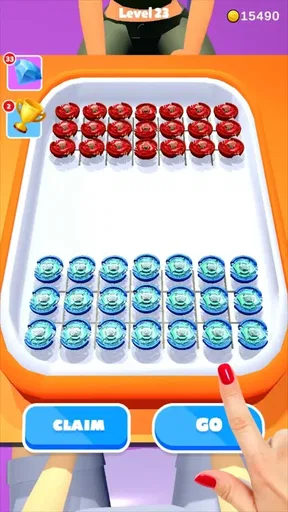

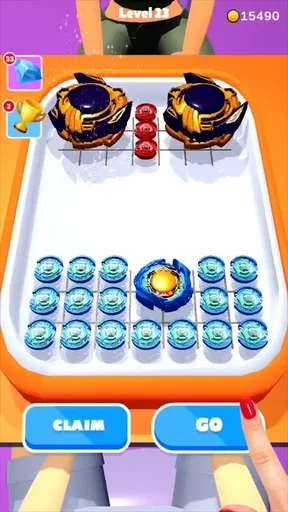
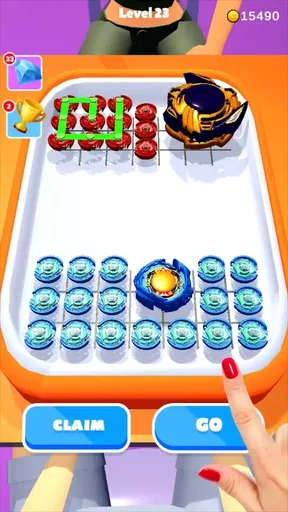

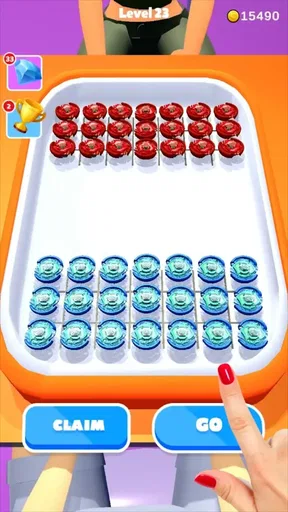

 Analysis by AppCompare
Spinner Merge is the kind of arcade game I open when I want a quick burst of action rather than a long, carefully planned session. Its central idea is easy to understand: combine spinning pieces, build a stronger blade, and use it to knock opponents out of the arena. That simplicity is a real advantage on a phone, because I can begin playing almost immediately without learning a complicated control system.
After spending time with it, I see the appeal clearly. The matches are built around movement, timing, and the satisfying visual change that comes from merging spinners. At the same time, the straightforward design means the experience can feel repetitive if I expect a deep competitive game. My opinion is positive but selective: this is a good fit for short, energetic play, especially for people who enjoy arcade battles with a light progression loop. It is less convincing for anyone looking for a large strategy system, a story, or highly detailed long-term competition.
How the spinning battles feel in everyday play
The first thing I notice is how quickly the game communicates its purpose. I do not need a lengthy explanation to understand that collecting and merging spinners matters, while staying active and avoiding dangerous collisions is just as important. That immediate readability makes it suitable for a spare moment, such as waiting for a bus or taking a short break between tasks.
In a typical session, I start by looking for opportunities to strengthen my spinner rather than rushing directly toward every rival. That small decision makes the action more interesting than simply moving toward the nearest target. A larger or better-formed blade can change an encounter, but chasing power also creates moments where I become too focused on merging and leave myself exposed. The best rhythm comes from switching between growth and attack instead of treating either one as the only objective.
The controls are most enjoyable when I make small corrections. Broad, careless movements can put me in a bad position, while controlled turns let me approach an opponent from a safer angle. I would not call the game mechanically demanding in the same way as a dedicated competitive action title, but it does reward attention. Even a simple arena becomes more engaging when I stop thinking only about size and start considering where the next collision might happen.
That balance is particularly useful for casual players. Someone who has never played a merge-based battle game can understand the goal quickly, while a more experienced arcade player can still experiment with positioning. I found that the game works best when I set a small personal objective for each round: improve my spinner efficiently, survive longer, or choose better moments to engage. Without that self-imposed focus, the repeated structure can lose some of its energy.
What makes the merge mechanic more interesting than it first appears
The merging system is not only a visual reward. It changes how I judge risk. If I see a chance to combine pieces but have an opponent close by, I have to decide whether the upgrade is worth the vulnerable moment. That trade-off gives the otherwise simple loop some useful tension. A player who always collects immediately may grow quickly but can also make predictable moves.
Worth Reading Before You Choose

EA SPORTS FC Mobile 26 Is a Bigger Football Game, but It Takes Time

Flipboard Shows What News Apps Must Do Beyond the Feed

Switching to Android Auto Means Rethinking Your Driving Routine

Google Calendar Makes a Crowded Week Easier to Manage

Ludo King Makes the Most of the Minutes Between Plans

Baby Panda World Brings Quick Play to Modern Phones, but Its Game Library Feels Busy
One practical tip is to avoid treating every available piece as urgent. I get better results when I first check the surrounding space, then move toward the merge opportunity if the route is reasonably safe. This is a small habit, but it prevents many avoidable mistakes. It also makes the game feel less random because my decisions begin to shape the outcome instead of merely reacting to whatever appears nearby.
Another helpful approach is to use the outer parts of the arena as temporary breathing room rather than staying in the center constantly. The middle can offer more opportunities, but it can also bring several threats together. Moving around the edge lets me observe rival positions and choose when to return. I would not use this as a permanent defensive strategy, since excessive caution slows progress, but it is useful when my spinner is not ready for a direct clash.
There is also a difference between being larger and being better positioned. A stronger spinner can still lose an encounter if it approaches badly or gets trapped between rivals. That is why I recommend learning movement before becoming obsessed with upgrades. The game becomes more satisfying when I regard power as one tool rather than a guaranteed win.
Speed expectations during short sessions
From a player’s perspective, the game is designed around fast access to action. I can pick it up for a brief session without needing to remember a complicated story or rebuild a large strategy plan. That makes it well suited to quick entertainment, although the same immediacy may feel shallow to players who prefer a slow opening and a carefully developed campaign.
The perceived pace depends heavily on how I play. Aggressive movement creates a lively round with frequent decisions, while cautious circling makes the experience calmer and gives me more time to read the arena. This flexibility is useful because I can adjust the tempo to my mood. If I have only a few minutes, I can play assertively; if I want to relax, I can focus on positioning and gradual improvement.
I would not describe every moment as equally exciting. The strongest parts are the brief sequences where a merge, a near miss, and a counterattack happen close together. Quieter stretches between those moments can feel like setup rather than meaningful action. That is normal for this type of arcade design, but it is worth knowing if you need constant intensity.
For a realistic everyday example, I could play a few rounds while waiting for food at a café. The game’s basic objective is easy to recall, and I do not need to commit to a long narrative section. If I lose, I can understand the immediate reason and try again. However, I would not choose it for a long train journey if I wanted one evolving adventure, because the repeated arena format may begin to feel familiar before the journey ends.
What happens when the action becomes busy
The heaviest moments come when several moving elements compete for attention at once. A merge opportunity can appear while rivals are approaching, and the temptation to grab an upgrade may conflict with the need to escape. These situations are where the game feels most active, but they are also where careless input is punished most quickly.
I find it useful to simplify my priorities during crowded moments. First I look for immediate danger, then I identify a clear direction of escape, and only after that do I consider whether I can safely collect or merge. This order prevents the common mistake of staring at a reward while ignoring an incoming attack. It is a small workflow, but it makes the game easier to read under pressure.
Heavy action can also expose the limits of the design. When several events occur close together, the outcome may feel less deliberate than it did during a quieter encounter. I sometimes know that I made a poor approach, but there are also moments when the arena becomes visually busy enough that it takes effort to understand exactly why a collision went against me. Players who prefer very precise competitive feedback may find this frustrating.
For that reason, I think the game is better approached as an accessible arcade experience than as a serious skill-testing esport. It rewards awareness, but it does not offer the same sense of exact control that I would expect from a highly technical action game. Its strength is the quick combination of merging and battling, not perfect competitive clarity.
Reliability, recovery, and the cost of a failed round
The short-round structure makes recovery from a mistake relatively comfortable. When I make a bad approach, I do not feel as though I have ruined a long campaign. I can treat the failure as a prompt to change one habit, such as collecting too greedily or entering the center too early. That quick reset is one of the game’s most practical strengths.
I also like that the basic concept remains understandable after a break. If I leave the game for a while, I do not need to relearn a complicated set of systems before playing again. The merge-and-battle loop is clear enough to return to quickly, which helps people who play irregularly rather than every day.
At the same time, recovery is not the same as deep progression. Replaying a similar type of encounter can be enjoyable when I am in the right mood, but it may not provide enough variety for players who need new objectives continuously. If your ideal mobile game is one where each return introduces a major new layer, this may feel limited compared with broader arcade collections or strategy games.
The overall rating sits at around three and a half stars from roughly three thousand ratings, while the game has passed ten million installs. I read that combination as a useful warning against assuming that popularity equals universal satisfaction. Plenty of players clearly find the concept appealing, but the middling average suggests that the simple loop and its limitations will not suit everyone.
Device requirements and practical expectations
The game supports devices running Android seven or later, which gives it a reasonably broad reach among Android users. That does not automatically tell me how every phone will handle busy scenes, but it does indicate that the entry barrier is not limited to recent hardware. Players with older devices should still keep their expectations sensible, especially if their phone already struggles with other games.
In terms of resource demands, I would treat it as a lighter arcade choice rather than a visually ambitious console-style production. Its appeal comes from readable arena action and quick interactions, not from enormous environments or cinematic presentation. That makes it a sensible candidate for a device where I want a straightforward game, although actual smoothness can vary with the phone, background activity, and available storage.
When I want the best chance of consistent play, I close demanding apps first and avoid starting a session while my phone is already warm or busy. That is not a special requirement of this title; it is simply a practical way to reduce interruptions in any action game. Because timing matters during collisions, even small distractions can feel more significant than they would in a turn-based app.
I would also consider the purchase model before handing the game to a child. The content rating is Everyone, and the game is free to install, but optional purchases range from less than a dollar to nearly thirty-four dollars per item. That does not tell me that spending is necessary, yet it does mean I would check the device’s purchase controls before allowing unsupervised play. Adults who dislike any in-app purchase environment may prefer a paid arcade game with a simpler billing model.
Who will enjoy it, and who should skip it
I recommend this game to someone who likes compact mobile sessions, visible upgrades, and direct arcade conflict. It is especially suitable for players who enjoy making quick positional decisions without studying a large rulebook. The merge mechanic gives casual play a clear purpose, while the spinner battles add enough pressure to keep collecting from feeling completely passive.
It is also a reasonable choice for families looking for an approachable game with an Everyone content rating. I would still explain the purchase settings to younger players, because the free entry point and optional items are separate considerations. The game can be easy to understand, but ease of use should not be confused with a completely friction-free spending environment.
I would skip it if I wanted a substantial single-player story, deep character development, or a highly elaborate competitive system. I would also look elsewhere if repetitive arena encounters quickly bother me. A traditional arcade game with many distinct modes may offer more variety, while a strategy title may be a better choice for someone who wants decisions to carry across a longer campaign.
It is not the right replacement for a precision action game either. The controls and objectives are accessible, but the experience is built around quick fun rather than exhaustive mastery. Players who spend time analyzing frame-perfect movement or demanding exact competitive balance may find its simplicity more limiting than liberating.
How it compares with familiar arcade alternatives
Compared with a conventional endless runner, this game gives me more direct interaction with opponents. I am not only trying to survive an obstacle course or beat a distance; I am deciding when to strengthen my spinner and when to confront another moving threat. That makes the action feel more social and confrontational, even when I only have a short time to play.
Compared with a standard merge puzzle, it adds urgency. In a puzzle, I can usually consider a move without an opponent immediately pressuring my position. Here, the upgrade decision happens in motion, so the same act of combining pieces becomes part of a tactical risk. The trade-off is that players who enjoy calm planning may find the battle layer distracting rather than exciting.
Compared with a deeper arena combat game, the advantage is accessibility. I can understand the core loop quickly and return after a break without studying extensive systems. The disadvantage is depth: the smaller set of central ideas can become familiar sooner. I see it as a middle ground between a casual merge game and a more demanding battle title, rather than a full substitute for either one.
That comparison also explains why the game’s performance expectations should remain modest. It does not need to overwhelm me with huge maps or elaborate effects to be entertaining. Its success depends more on whether the action feels readable and responsive during short encounters. When that works, the simplicity feels focused; when it does not, there are fewer secondary systems to keep me interested.
Version, developer, and the overall value
Sunday.gg is the developer behind the game, which is currently at version three point eight. I regard the version number as useful context rather than a promise of a particular experience. What matters to me in practice is whether the current build feels comfortable on my phone and whether the central loop remains enjoyable after the initial novelty fades.
The free price makes trying it straightforward. I can test the movement, merging, and battle rhythm without committing money at the start. That is important here because the game’s suitability depends strongly on personal tolerance for repetition. I would rather sample a few sessions and decide honestly than assume that a popular arcade concept will automatically match my preferences.
The main value comes from convenience. I get a game that is easy to start, simple to understand, and capable of producing satisfying moments when a careful merge leads to a well-timed attack. The main limitation is that the same focused design may not offer enough variation for long-term players who want a constantly expanding experience.
My practical advice is to play with a deliberate rhythm: observe first, merge when the route is safe, and attack only when positioning supports it. This makes the game feel more skillful and reduces the frustration caused by impulsive collisions. I would also keep purchase controls in mind and judge the game by short-session enjoyment rather than by expectations of a large arcade campaign.
In the end, I think Spinner Merge succeeds as a quick, approachable battle game with a clear hook. It is fast to understand, forgiving to return to, and more interesting when I treat movement and timing as important as collecting. It is not a deep alternative to every arcade or strategy game, and its repetitive structure will not suit everyone. For a free pick-up-and-play experience on a compatible Android device, though, I find it worth trying—especially if you enjoy the idea of turning simple merges into brief, energetic rival encounters.
Pros
- Simple merge mechanics are easy to learn within minutes.
- Colorful visuals make the spinner-based gameplay appealing.
- Short rounds work well for quick mobile play sessions.
- Progression encourages experimentation with different spinner combinations.
- The game is generally relaxing and requires little concentration.
Cons
- Gameplay can become repetitive once the main merge pattern is familiar.
- Some upgrades may require considerable time or repeated actions.
- Ads can interrupt the experience
- especially between rounds.
- Limited strategic depth may disappoint experienced puzzle players.
- Performance and battery use may vary on older devices.
FAQs for Spinner Merge
What is Spinner Merge and how does the gameplay work?
Spinner Merge is a casual puzzle game centered on combining matching spinner pieces to create higher-level items. After starting a round, you place or merge available pieces on the board and try to plan future moves without running out of space. The gameplay is easy to understand, but reaching better scores requires careful positioning, patience, and efficient use of the available board.
Is Spinner Merge free to download and play?
Spinner Merge can generally be downloaded and played without paying an upfront purchase price. However, the game may include optional advertisements, bonus features, or in-app purchases depending on the version and platform. These purchases are not normally required to enjoy the basic gameplay, but they may provide extra rewards, remove ads, or help players progress more quickly.
Does Spinner Merge require an internet connection?
Spinner Merge is designed as a simple casual game, so many of its core features may be available without a constant internet connection. Offline play can be useful when traveling or when mobile data is limited. Nevertheless, an internet connection may still be necessary for advertisements, cloud-related functions, updates, purchases, or certain promotional rewards offered within the application.
Is Spinner Merge suitable for children and casual players?
Spinner Merge is easy to learn and does not usually require advanced gaming experience, making it suitable for casual players who enjoy short puzzle sessions. Parents should still review the age rating, advertisements, and available in-app purchases before allowing children to play. The game’s simplicity is appealing, although younger users may need supervision around optional purchases.
Are there advertisements or in-app purchases in Spinner Merge?
Spinner Merge may contain advertisements and optional in-app purchases, as is common with free-to-play mobile games. Ads can sometimes appear between rounds or when claiming additional rewards, while purchases may offer boosters, coins, ad removal, or other conveniences. Before downloading, check the store listing and device purchase settings if you want to control unexpected spending.


